
Find everything you need to know about witness cones here!
Witness or pyrometric cones are a great tool for getting more information on your firings! They can help you trouble shoot cold spots in your kiln, possible cold or hot spots, and offer a second way to gauge your gas, woodfire, and soda firings (as those are all tricky in their own ways) during firing.
What type of cones should I use?
It depends! There are sitter cones, self-supporting cones, and cone packs. At GW, we primarily use cone packs!
Sitter cones are adorable, but typically not used for anything other than manual “Kiln Sitter” kilns. Essentially, when the kiln reaches temperature, the cone will bend under the weight of a rod, which will release a latch and cause the kiln to turn off.
Self-supporting cones are great for accuracy, but can be a pain to set up. The angle can never be wrong with them (like it can with cone packs), but you’ll have to make sure they’re in the right order every time. In other words, unless you’re using just one cone pack or need to be as accurate as possible, cone packs are usually more convenient.
Cone packs are fast, convenient, and relatively reliable! We recommend making them ahead of time, so that they are fully dry by the time you fire. Although, pro tip: use vermiculite in your cone packs’ boats if you make them a bit late and need them to dry uber fast! When making cone packs, it’s important to ensure you get the angle correct, as failure to do so can make it hard to determine if a cone is falling (bending) at all. The images below show the angle and positioning we like to use at GW:
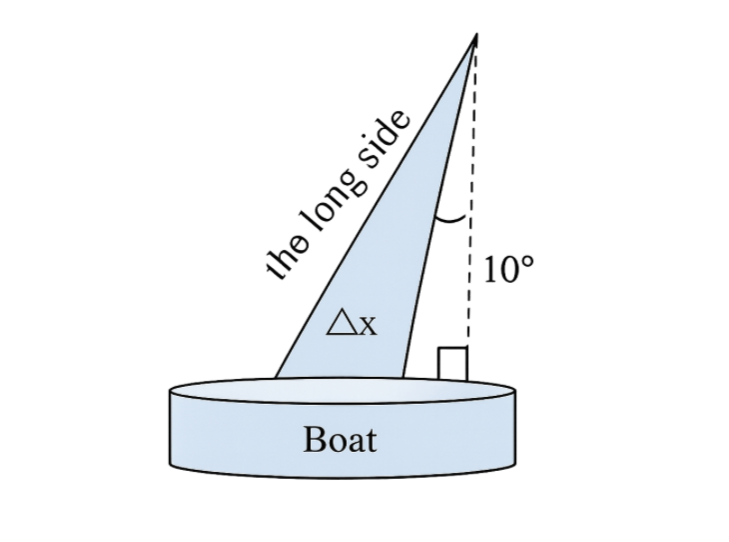
cone position and angle
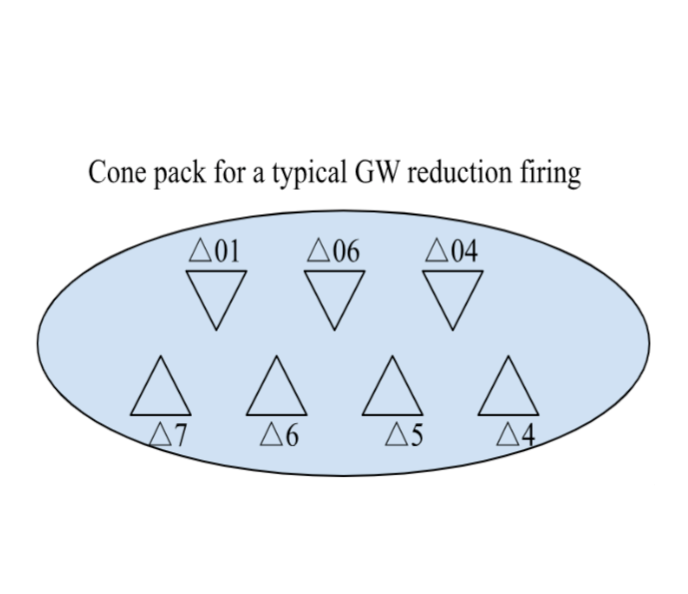
cone pack for a typical Groundworks reduction firing
The long side typically faces up, with the flat face depicting the cone number facing out. When deciding what order you should have your cones in, start with the lowest and move to the highest. Pick your cones by thinking about what information you might need (ex. When will you adjust the damper for heavy reduction vs. light reduction? More info in our firing guide blog link). We typically like to go to one cone past where we are planning to fire to.
When should I use cones?
It depends! Lots of potters use them for bisque and glaze firings for accuracy, tracking, and greater insight into their kilns. At GW, we typically only use them for our glaze firings. While we sometimes skip using cone packs for our oxidation firings (electric kilns are typically very consistent and low maintenance for firings), they are a must for reduction, wood, and soda. They help us gauge if the top and bottom temperatures are within a good range of one another, and if our firings are on track.
Where should I place self supporting cones or cone packs?
They go in front of the peep hole. Be sure that you are able to see all the cones and can safely dodge any flames if you’re not using an electric kiln.