
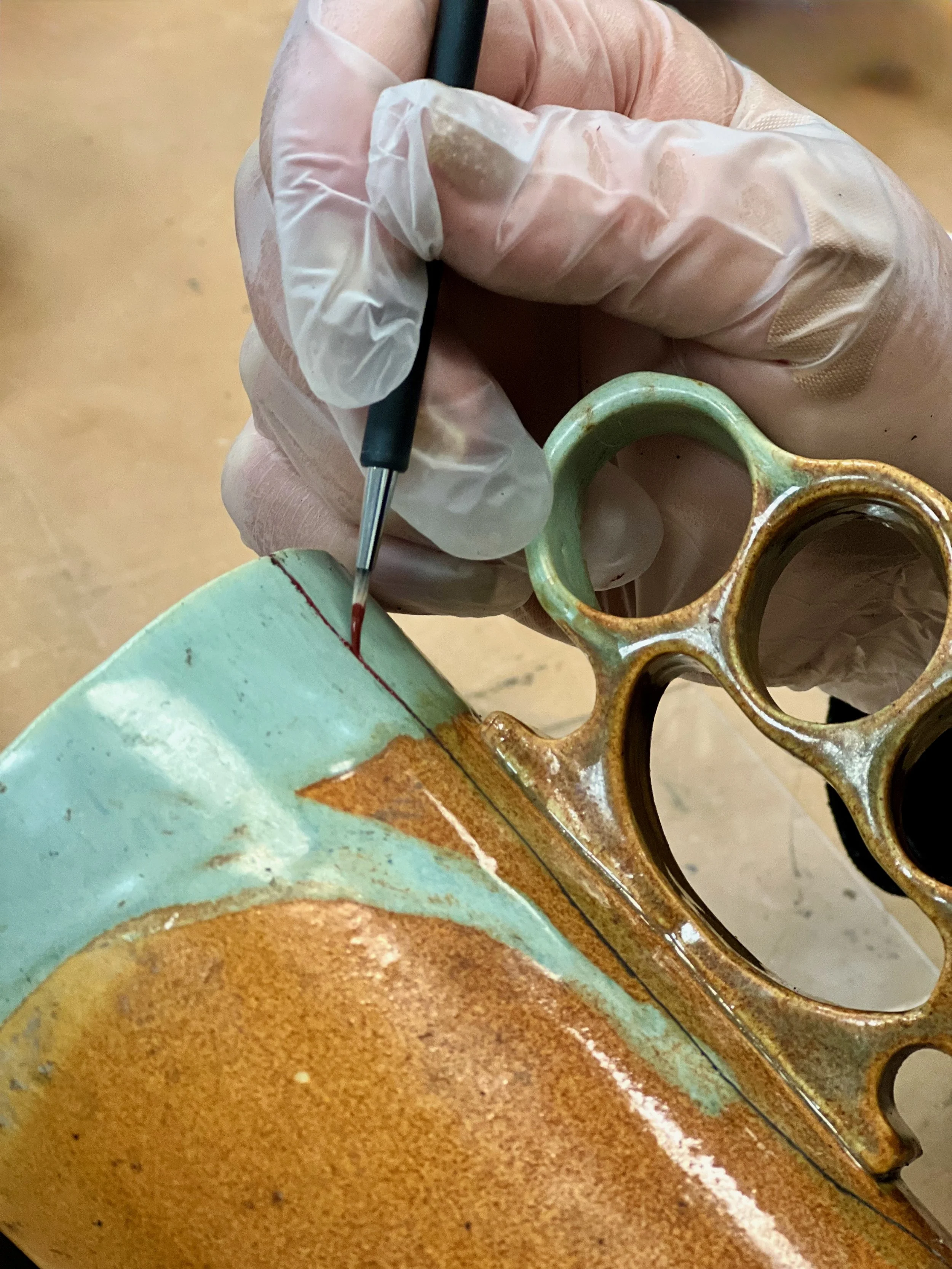
Anyone who works with ceramics knows how frustrating and hard it can be to avoid cracks in their work. Everyone can relate to dropping their favorite mug or knick-knack, and feeling crushed by it. Luckily, here are a few tips and tricks, and methods tried and true from centuries ago! Some of these are easy access for anyone at home, and others are art forms themselves.
Greenware
Bisque-fix: This is a great option for bone dry work! It’s available for purchase (Amaco and Mayco are great options), or you can make it yourself. Keep in mind bisque fix is not strong or “effective” until after firing.
Vinegar: Affordable and easy for anyone to DIY, vinegar is the magic ingredient for damaged greenware. It’s mixable, sprayable, dippable, and paintable. At GW, we offer “magic water” (water + vinegar) at all our studios in spray bottles. Vinegar can also be painted on directly, or mixed with clay to make a vinegar slip. Vinegar acts as a flocculant, which makes the clay “stickier.” Flocculants cancel the negative particles (i.e. the clay particles go from repelling one another to clumping), and reform the clay (over adding additional slip or water) by keeping the particles suspended, which helps with shrinkage. Vinegar solutions work on clay at all levels of dryness. Other flocculants include epsom salts (magnesium sulfate), calcium chloride, and calcium nitrate–though these are typically used in glazes to prevent hard panning.
Slip: Perfect for while pieces are being constructed, and perfect for work that isn’t too dry yet. Ideally, if slipping and scoring are properly applied during attachment along with proper drying, other mending techniques shouldn’t be needed. This isn’t a great option for work beyond the leather-hard stage.
Bisqueware
Bisque-fix: All the bisque-fix options mentioned above for greenware also work on bisqueware! Spectrum makes a bisque fix that works on bisqueware only. Just like greenware, the paste won’t work until it’s been fired, so be sure to refire your bisqueware!
Glaze: This is a good option for flat work, knobs on lids, or cracks on the inside. Unfortunately, if the work is at an angle (like a mug handle), it’ll slide off during firing. Runny glazes can fill the cracks, and Shino’s can work well, as they contain a high concentration of clay compared to other glazes. Applying glue (any liquid school glue) on the connection can make glazing and transport of your work easier. Just like bisquefix, the mend won’t be effective until after firing.
Glazeware
Kintsugi (urushi): You’ve probably seen this on your feed, with the concept of wabi sabi and other aspects of Asian and Japanese cultures becoming popularized over the past decade. Urushi is the use of (tree resin) lacquer for repairs, and kintsugi is the addition of precious metals, typically gold or silver. Kintsugi is the art of restoration and mushin, accepting change and detachment. It is a beautiful way to repair broken work, and is believed to have begun in 15th century Japan, with Shogun Ashikaga Yoshimasa. DIY home kits are available, and they differ from the products and methods used by traditional artisans. Kintsugi done by artisans with urushi is safe for food and beverage consumption.
Ju Ci (Juci): Ju Ci predates Kintsugi, and was well established by the Song Dynasty (920-1279), though exact dates are unknown. Ju Ci embraces imperfection, and naturally makes repairs water tight, by locking the pieces back together with “staples” along their cracks. Due to its nature and lack of glue, it is one of the few ways ceramics can be repaired and continued to be safely used for food and beverage consumption.
Asphaltum: Asphaltum (bitumen) is commonly used for road work. It was also used for Egyptian mummification and as paint pigment.You might recognize asphaltum in print making from our post on traditional v.s. GW copper etching. It’s also popular among some woodworkers. (Often coastal) indigenous peoples used asphaltum as adhesive, caulk, water proofing, and paint, as well as ceramic repair. Due to its naturally sticky and water resistant nature, it was used to repair earthenware vessels (typically the rims of them). That being said, it’s not commonly used anymore, and asphaltum (asphalt) can be toxic when repeatedly exposed to heat.
(Resin) Epoxy: This is a common and accessible option for repairing damaged glazeware. It will require patience, as it can take a while (as in multiple days) for the epoxy to cure. Benefits include color options, moldability, and the option to paint on top, if necessary. If you use a “cold glaze” or “cold finish” on top, it’ll look like nothing happened to your piece at all. Apoxie Sculpt is great for filling in big gaps or remaking small bits and pieces. This article from Lakeside Pottery has a bunch of great tips and tricks for different repairs with epoxy. However, most epoxy methods will render your work no longer food, microwave, dishwasher, or oven safe (though they’ll often stay water proofed). There are very few resins that follow and meet FDA guidelines, and they are only safe for consumption if properly mixed and cured. Please be sure to do your research and follow directions to a tee when using resin to repair any ceramics you plan on using for food or beverages.
Super Glue: Also known as cyanoacrylate (CA) glue, super glue is a quick and easy fix. It works great under epoxy if you need the extra support, or are fixing something that’s awkward to keep in place. However, it’s not as durable as epoxy on its own, is not safe for consumption, and degrades with heat.
Hopefully one of these tricks will help you out if you have a cracked or broken piece! It’s okay to recycle, discard, or repurpose your pottery, too :)